
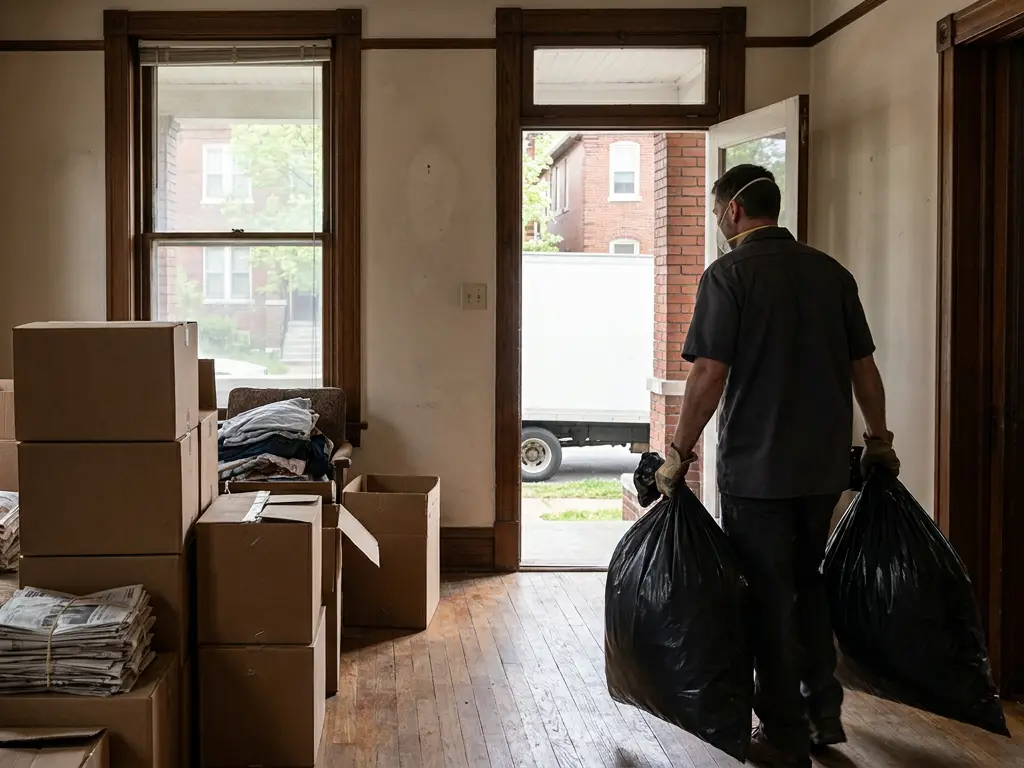
Hoarding cleanup for homes, apartments and rentals
St. Louis Hoarding Cleanup, Whole-House Cleanouts Across St. Louis
Local cleanout crews for St. Louis and eleven towns within 28 miles, and straight answers on what a hoarded house usually takes to clear.
- St. Louis and eleven towns within 28 miles
- Written price before work starts
- Licensed, insured local contractors
- Occupancy inspection rules covered
St. Louis Hoarding Cleanup connects families, landlords and property owners in St. Louis with local cleanout crews for hoarded and badly cluttered homes. This site explains what a hoarding cleanup involves, what it typically costs here, and how the city and county occupancy inspections change the deadline. Call and describe the house; you will hear what the job usually takes before anyone carries anything out.
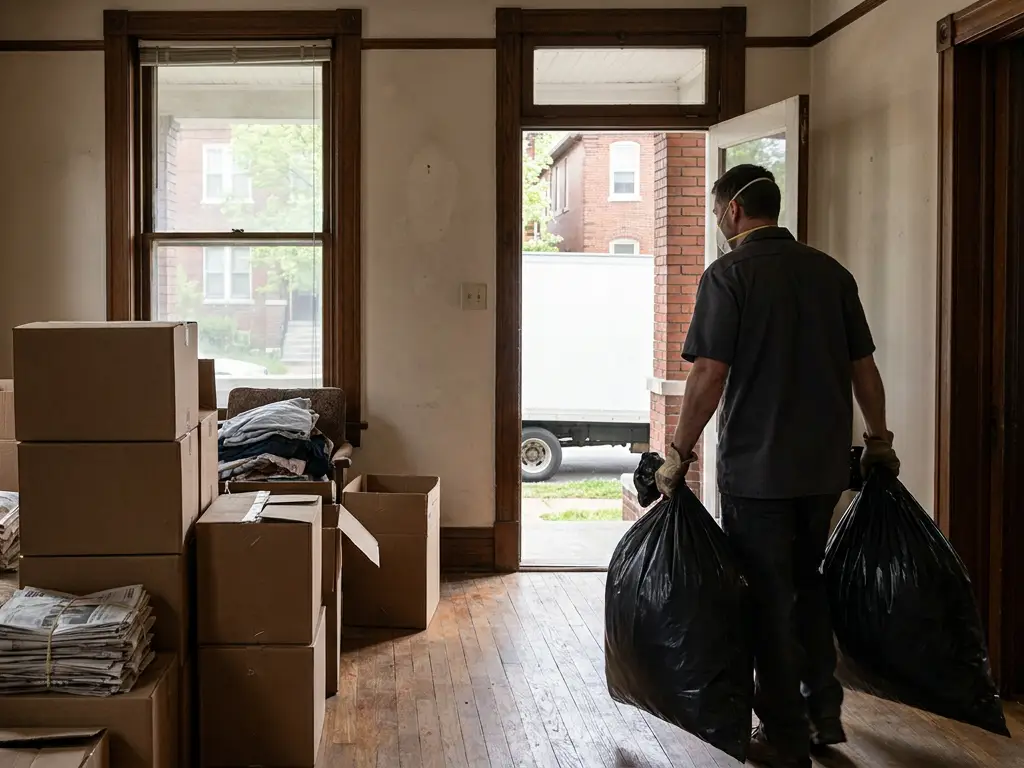
A whole-house cleanout before a sale typically runs $2,000 to $6,000; leave the house full past the occupancy inspection and the City of St. Louis fee alone goes from $120 to $200, before the 30-day clock to correct violations starts running.
$2,000 to $6,000 for a typical whole house
Hoarding cleanup in St. Louis typically runs $1 to $2 per square foot, so about $2,000 to $4,000 for a 2,000 square foot house and up to $6,000 for a 3,000 square foot one, the ranges published national cost guides give for this work. A single cluttered room starts around $500, and junk hauling on its own runs about $150 to $350 a truckload. Every job gets a written price before work starts.
Get a price: (636) 216-6490When a house has gone past ordinary clutter
- Rooms that can no longer be used for what they are for, like a kitchen nobody can cook in
- A front or back door that is blocked, or a hallway down to one narrow path
- Stacks against the furnace, water heater or the electrical panel in the basement
- Clutter spilling onto the porch, the yard or into the car
- A family member who will not let anyone inside
- A code enforcement letter, an eviction date or a closing date with the house still full
What a hoarding cleanup actually involves
A hoarding cleanup is not a bigger version of a junk pickup. A single-load haul is a crew, a truck and an hour. A hoarded house is sorting, bagging, carrying and hauling, usually over two to five days, with several truckloads leaving the property and a list of things that must be kept and found along the way: deeds, titles, tax papers, medication, photographs, jewelry and cash, which turns up in hoarded homes more often than people expect.
Most jobs run in the same order. The crew walks the house with whoever has authority over it and agrees what stays. Paths come first, then exits, then the kitchen and bathroom so the house works again. Each room is cleared to the floor, sorted into keep, donate, recycle and dispose, and the dispose pile goes to a transfer station or landfill. A basic clean follows once the surfaces can be reached.
Three kinds of calls, three different deadlines
Families
A parent who can no longer manage the house, or an estate that has to be emptied before it can be sold. The deadline is usually a move, a closing or probate, and the hardest part is often what to keep. The guide to the signs a relative is hoarding covers how these situations usually start.
Landlords
A tenant who left a unit full, or a unit that cannot pass the next rental inspection. In the City of St. Louis rental units are inspected every three years or at a change of occupant, and a unit full of belongings cannot be inspected at all.
Sellers and their agents
Most St. Louis County cities inspect a house before it changes hands. A hoarded house cannot pass an inspection that needs the electrical panel, the exits and the plumbing in reach. The occupancy inspection guide explains the rules town by town.
Not sure how big the job is? Describe the rooms and what is in them, and get a straight answer on what it usually takes.
Call (636) 216-6490The occupancy inspection is the real deadline here
St. Louis is unusual. In the City of St. Louis a Certificate of Inspection is required before a vacant home is occupied, before a sale if no certificate has been issued in the past twelve months, and before a rental unit is occupied. The inspection checks the building against the International Property Maintenance Code, water and electric must be on, and violations must be corrected within 30 days.
St. Louis County requires the same kind of inspection at every change of occupant in unincorporated areas and in the cities that contract with the county, and most of the other cities run their own: Florissant, Kirkwood, University City, Webster Groves, Hazelwood, Ballwin, Maryland Heights and Arnold among them. A full house turns an inspection date into a cleanout deadline.
Where the material goes
City of St. Louis bulk pickup takes up to three items once a month, which is no help to a house that needs several trucks. Missouri law keeps major appliances, lead-acid batteries, waste oil and yard waste out of landfills, so refrigerators, washers and car batteries are separated and recycled. Paint, solvents and chemicals go to the regional household hazardous waste program, which takes reservations from St. Louis City, St. Louis County and Jefferson County residents.
Usable furniture, clothing and housewares go to donation where the family wants that. Paper is recycled once anything important has been pulled out of it.
A notice on the door or a closing date this month?
Code enforcement letters, eviction dates and closing dates do not move. Call, give the date, and describe the house room by room.
Call (636) 216-6490What this site does not cover
The crews this site connects you with handle clutter, trash and belongings, which covers most hoarded homes. A house with heavy animal or human waste, sewage on the floors, widespread mold, needles or a death in the home needs a biohazard remediation company with the equipment and disposal permits for it. If that is what you are describing, you will be told so on the call rather than sent a crew that cannot finish the job.
Questions people ask
How much does hoarding cleanup cost in St. Louis?
Typically $1 to $2 per square foot, so about $2,000 to $4,000 for a 2,000 square foot house and up to $6,000 for a larger one. A single room starts around $500.
How long does a hoarder house cleanout take?
Most whole houses take two to five days, depending on the size of the house, how full it is and how much sorting the family wants done.
What are the signs a house needs a hoarding cleanup and not a junk pickup?
Rooms that cannot be used, blocked exits, clutter against the furnace or electrical panel, and spillover onto the porch or yard. Those take sorting and several truckloads, not one.
Do I have to be there during the cleanout?
Someone with authority over the house needs to agree what stays before work starts. After that, many families check in once a day rather than staying on site.
Do the crews handle biohazard or animal waste?
No. Homes with heavy animal or human waste, sewage, mold or a death in the home need a biohazard remediation company, and you will be told so on the call.
Which towns are covered?
St. Louis and the towns within 28 miles of the city, including University City, Webster Groves, Kirkwood, Florissant, Maryland Heights, Hazelwood, Arnold, Ballwin, Chesterfield, St. Charles and O'Fallon.
Start here
-
All fifteen cleanout services
Whole houses, apartments, rentals, estates, garages, basements and yards, each with its own typical price.
-
Where we work
St. Louis and eleven towns inside 28 miles, across three counties and the city, each with its own occupancy inspection rules.
Talk it through before anyone carries anything out
Say how many rooms are affected, whether there is a deadline, and whether anything in the house needs to be kept. You will hear what the job usually involves, what it tends to cost, and how long it tends to take.
Call (636) 216-6490